Silent Calls and AI Voice-Cloning Fears: What the Evidence Says—and What to Do
A viral post says blank calls are harvesting voices for AI cloning. Federal guidance confirms voice impersonation is real—but a silent call alone proves nothing. Here’s how to verify urgent calls without panic.
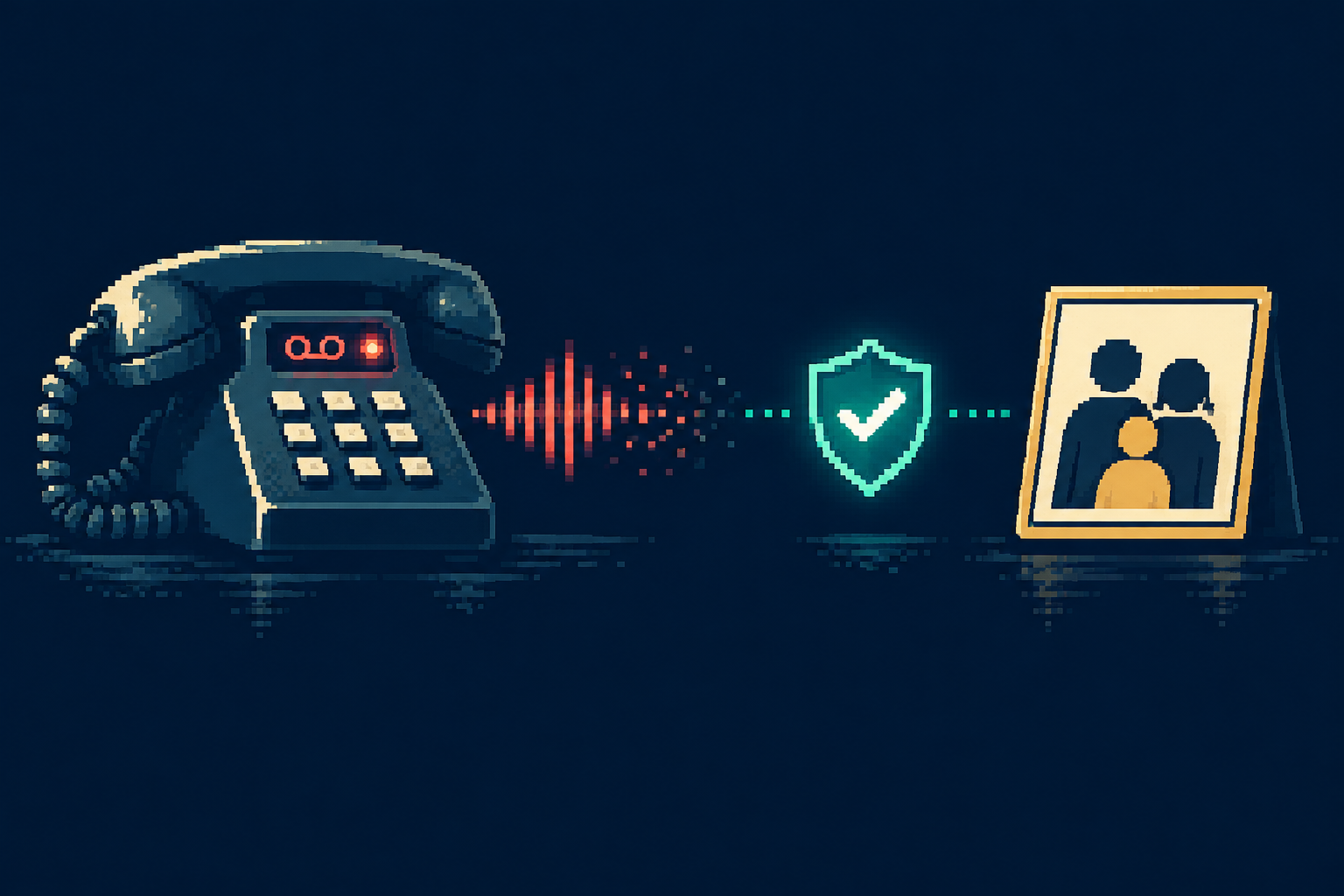
A viral Reddit post claims that silent unknown calls are being used to collect voice samples for cloning. The concern is understandable, but the post is not proof of a coordinated voice-harvesting campaign. Here’s what federal guidance confirms, what it does not, and a calm way to handle an unfamiliar call or voicemail.
In early October 2026, a post in r/privacy described a series of calls that allegedly went silent when answered and left blank voicemail messages. The poster said a company technology team suspected the calls might be gathering voice samples for future AI cloning and recommended replacing personalized voicemail greetings with a generic recording. The thread attracted attention because the scenario sounds plausible—and because deepfake voice fraud is real.
But those are two different claims. The first—that scammers can misuse audio to imitate a familiar voice—is supported by consumer and law-enforcement guidance. The second—that a silent call is a reliable way to capture a useful voice sample, or that the specific calls in the post were doing that—is not established by the Reddit post. The FTC and FBI guidance cited here warns about voice imitation and emergency impersonation; it does not say every blank call is voice harvesting. Treat the forum account as a prompt to prepare, not as proof that a new campaign has been confirmed.
What a voice-cloning scam can look like
A scammer contacts a relative, coworker, or friend and claims there is an emergency: a crash, arrest, medical bill, lost phone, or urgent business payment. The voice may sound familiar. A second person may join the call as a supposed lawyer, officer, or supervisor. The target is told to act immediately and keep the conversation secret, often by sending money in a way that is hard to reverse.
The FTC explains that a scammer may use a short audio clip—potentially from public content—along with voice-cloning software to imitate a loved one. Its advice is direct: do not trust the voice alone; hang up or pause, then call the person back using a number you already know. If you cannot reach them, contact another family member or trusted person. The FTC also says scammers may ask for wire transfers, cryptocurrency, payment-app transfers, or gift cards.
The FBI’s 2025 Internet Crime Complaint Center annual report describes AI-assisted fraud as a broad and evolving category. It reports more than 22,000 complaints with AI-related information in 2025 and adjusted losses above $893 million across those complaints. The report separately discusses distress scams and says victims reported over $5 million in losses to those scams. Those figures are not a count of silent-call voice harvesting; they provide context that synthetic audio is one of several tools used in reported fraud.
What a silent call can—and cannot—tell you
A silent call can have many explanations: an automated dialer, a dropped connection, a call-center handoff, a robocall that detected an answer, a misdial, or a scammer checking whether a number is active. The caller ID can also be spoofed. Without reliable carrier or investigative evidence, a blank call cannot identify who placed it or why.
It is reasonable to minimize unnecessary public audio if that makes you more comfortable. But you do not need to panic, disconnect from everyone, or assume that a normal “hello” has created a voice-clone recording. The recent Reddit discussion included commenters pointing out that silent calls have long been associated with automated dialing and number validation. That community observation is also not conclusive evidence about any specific call. The honest answer is that the behavior is ambiguous.
| What happened | What you can conclude | What you should do |
|---|---|---|
| You received a silent or dropped call | The call was silent or dropped; its purpose is unknown. | Do not call back a suspicious number. Block or report repeated unwanted calls using your carrier or phone’s built-in tools. |
| You left a name in a voicemail greeting | Your greeting is publicly audible to callers who reach voicemail. | If you prefer less exposure, switch to a generic carrier greeting. This is a privacy choice, not proof you were targeted. |
| A caller sounded exactly like a relative and asked for urgent money | A familiar-sounding voice is not identity verification. | Pause, end the call, and contact that relative through a number already saved or another trusted channel. |
| The caller demanded secrecy, a code, or an unusual payment | Those are strong reasons to stop and verify independently. | Do not share login codes or move money while on the unexpected call. Ask a trusted person to help check the story. |
A three-part response that works even when you feel shaken
1. Break the rhythm
Scams depend on keeping you inside the caller’s tempo. Say, “I need to verify this. I’ll call back,” then end the call. You do not have to explain, debate, or prove that you care. A real emergency can withstand a brief identity check. If someone claims there is immediate physical danger, contact local emergency services using a number you choose independently rather than sending money to the caller.
2. Verify through a separate route
Use a saved contact, a number on a known account statement, or an official app—not a number the caller gives you or one embedded in a text. Call the alleged family member directly. If they do not answer, contact another person who can check on them. In a workplace, use the company directory or a previously established channel to verify a payment or executive request.
3. Refuse the high-risk transfer
Do not read a one-time password aloud, approve a login request you did not initiate, buy gift cards, send cryptocurrency, or hand cash to a courier because an unexpected caller says it is the only way to help. The FTC notes that emergency impostors often insist on payment methods that are difficult to reverse. If the request changes after you propose an independent callback, treat that as another reason to stop.
Should families create a code word?
A family check phrase can be one layer of a plan, especially if people already discuss it and keep it private. It is not a magic detector. A word can be guessed, overheard, reused in an account breach, or disclosed accidentally. An urgent caller may also invent a plausible reason why the person cannot say it. A better plan combines a private phrase with a call-back rule, a second trusted contact, and an agreement that nobody will be blamed for taking time to verify.
Set the plan during a calm conversation, not in the middle of a scare. Decide who should be contacted, what to do if the first person is unreachable, and what kinds of requests always require a second confirmation. For payments at work, use a separate approval channel and known callback numbers. A voice—even a familiar one—should never be the sole authorization for a high-value transfer.
Is a generic voicemail greeting worthwhile?
It can reduce how much identifying audio is available to an unknown caller, and it may also reveal less personal information to strangers. Keep expectations proportionate: it cannot erase audio already published or shared, prevent number spoofing, or stop someone from using a different impersonation technique. You can change it through your carrier’s voicemail settings if the option is available. If calls are part of your caregiving, medical, or work routine, consider whether unknown-call filtering could cause you to miss legitimate contacts; choose settings that you can reliably review.
More important than a greeting is the verification habit. A personalized voicemail is not consent to a payment, and a silent call is not evidence of compromise. If someone uses a voice you recognize to demand secrecy, credentials, a code, remote access, or an urgent transfer, stop and use a separate known route.
If you already answered or said a few words
Do not treat a brief greeting as proof that your identity or accounts are compromised. If the call was merely silent, you generally do not need to reset every password because of that fact alone. Block the number if appropriate, enable your carrier’s spam-call controls, and report repeat unwanted calls to the relevant provider or regulator.
If the caller persuaded you to send money, contact the bank, payment app, gift-card issuer, or crypto platform immediately using its official contact route. Ask whether the transfer can be stopped or the account secured. If you shared a password or verification code, go to the real service directly, change the password, review active sessions and recovery information, and contact its support team. In the United States, report fraud to the FTC at ReportFraud.ftc.gov and internet-enabled crime to the FBI’s IC3 at ic3.gov. Reporting does not guarantee reimbursement, but it creates a record that can help authorities identify patterns.
Keep the lesson, not the panic
The October Reddit thread captures a real audience pain point: people do not know whether a strange call is routine spam, a check that the number is active, or preparation for a more targeted impersonation. The uncertainty itself can be stressful. The evidence-based response is not to declare that every silent voicemail is an AI attack. It is to reduce what you expose when convenient, use call screening if it suits your needs, and build a verification rule that works even if a caller sounds convincing.
For the next unexpected call, remember this simple sequence: pause, hang up, call back on a saved number, and involve a second trusted person before any money or account action. The sound of a familiar voice may be emotionally powerful—but it is not the same thing as proof of identity.
Related reading: learn how to verify an unexpected security alert without using its embedded number.
Sources
- Federal Trade Commission: Scammers Use Fake Emergencies To Steal Your Money — voice cloning, emergency pressure, call-back verification, and payment warnings.
- FBI Internet Crime Complaint Center, 2025 Annual Report — reported AI-related complaints and distress-scam context.
- FBI: Senior U.S. Officials Impersonated in Malicious Messaging Campaign — impersonation via messaging and AI-generated voice notes.
- r/privacy discussion, October 7, 2026 — a user’s account of silent calls and a proposed voice-sample explanation; an unverified anecdote, not proof of a campaign.