One Dollar to Redeliver? How Fake Delivery Texts Turn a Missed Package into a Card-Theft Trap
A text about a missed delivery or tiny postage fee may lead to a fake carrier page designed to collect card and personal details. Here is how to verify a real parcel, handle legitimate import charges, and respond if you clicked.
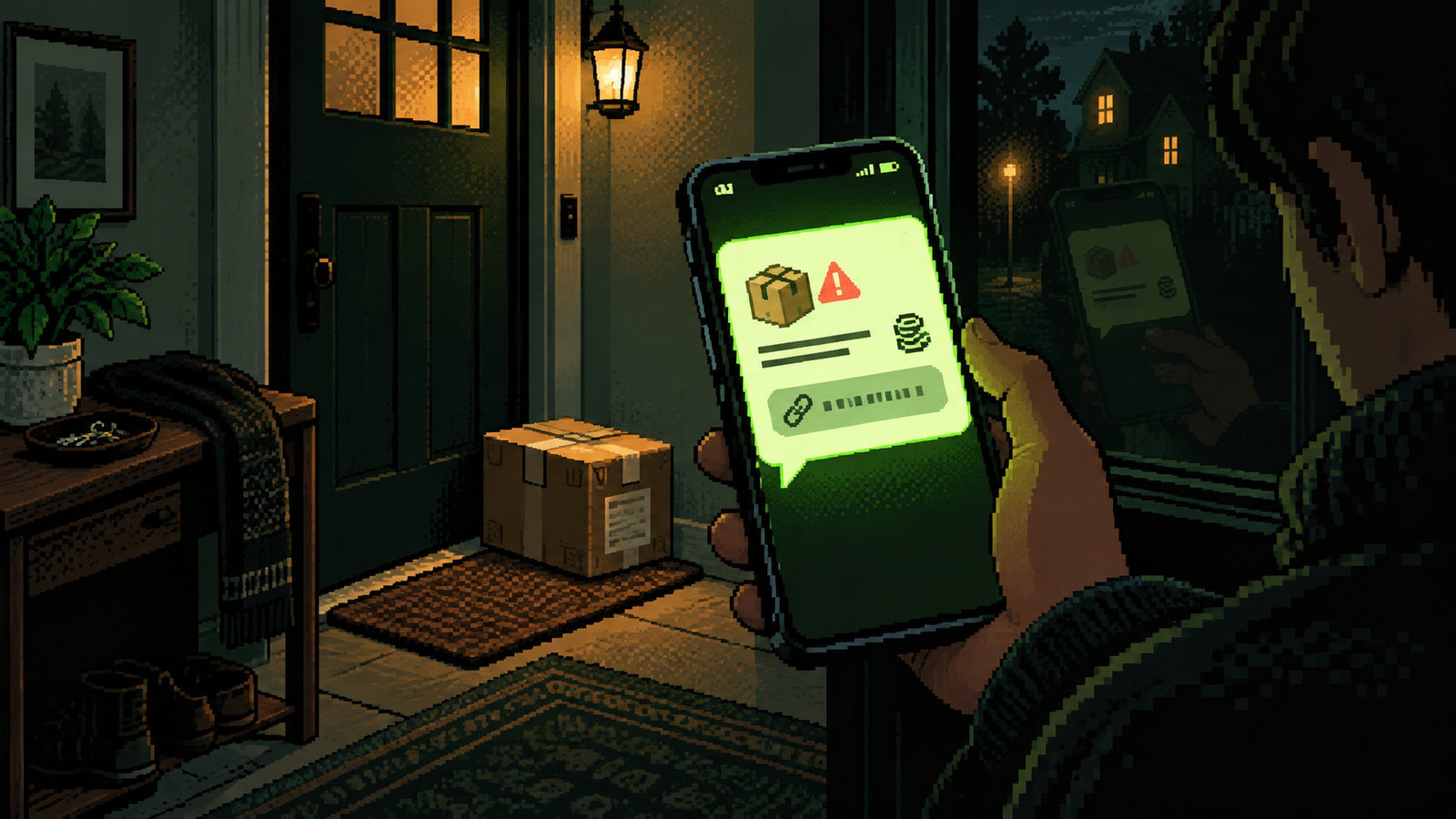
A delivery text that asks for a tiny redelivery fee feels easy to resolve: tap, pay a dollar, get on with your day. That small amount is often the bait. The link may lead to a page imitating a postal or courier company and ask for a card number, address, phone number, or other details that can be misused. The package problem is a story designed to make the recipient act before checking whether a delivery problem exists.
- Do not use a delivery link in an unexpected text or voicemail. Open the retailer’s order page or the carrier’s official app/site yourself.
- Check whether you actually have a shipment and whether the tracking number matches the order.
- A small fee request is not automatically proof of fraud—but an unsolicited request for payment or sensitive details deserves independent verification.
Why a one-dollar request can cost more than a dollar
Delivery messages arrive at exactly the right point in a busy routine: someone is at work, leaving home, or expecting a time-sensitive parcel. The message supplies a plausible obstacle—address incomplete, failed delivery, unpaid postage, parcel held at depot—and offers a direct fix. The requested fee is low enough that a recipient may not stop to inspect the sender or the web address.
The Federal Trade Commission warns that messages impersonating the U.S. Postal Service can claim a package is delayed or needs a small postage payment. Similar lures can borrow the name and visual design of other carriers. The fake site may collect payment-card details under the pretext of a fee, or ask for personal information that makes later impersonation more credible. The original amount can be only the opening move: a stolen card may be charged, or the details may be reused in follow-up fraud.
There is a second risk: the message may make a person expect a parcel they never ordered. That can overlap with package-brushing stories, where an unsolicited item appears without a fee. The two situations are not identical. This guide focuses on the link and payment request: a delivery narrative that tries to pull card or identity information from you. If an unexpected package simply arrives, do not scan an unfamiliar QR code or use its included instructions to “claim” a prize; see our separate unexpected-package guide.
Recognize the pressure pattern without guessing from one clue
A typo, odd sender name, or shortened URL can be a warning, but scammers can copy polished branding and legitimate companies sometimes send awkward notices. Instead of trying to identify a message by appearance, test its claim through a channel that did not come from the message.
| Message claims | Safer verification | What not to share on an unexpected link |
|---|---|---|
| “Your package is waiting for a small fee.” | Check the seller’s order history and official tracking page; ask the carrier through its published contact channel. | Full card details, security code, banking login, or one-time code. |
| “The address is incomplete; update it now.” | Compare the address in your retailer account and contact the retailer directly if it is wrong. | Social Security number, password, or broad identity details for a routine delivery correction. |
| “A driver could not reach you.” | Use the tracking number from the purchase confirmation, not a number or link supplied in the text. | Payment or login information just to view a tracking status. |
| “Call this number to release the parcel.” | Look up the courier’s customer-service contact independently and ask about the tracking number. | Remote access to your phone or computer, or a code sent to your device. |
One careful exception: real customs charges
It is important not to turn a warning into an inaccurate blanket rule. International shipments can involve legitimate duties or taxes, and carriers may have official payment workflows. FedEx, for example, describes import-duty payment through its FedEx Import Tool. The safe distinction is not simply “courier asks for money, therefore scam.” Verify that a real shipment exists, enter the tracking number on the carrier’s official site reached independently, and use the payment route described there. If the text’s link is the only way to see the package or pay a fee, pause and contact the carrier via its known channel first.
Also, tracking texts can be legitimate if you enrolled with a retailer or carrier. A familiar brand name in the sender field still does not authenticate a link by itself. You can use a notification to learn that a parcel may be moving, then navigate independently to the account you already use.
If you clicked but did not enter anything
Close the page. Do not install an app, download a “tracking document,” or call a number shown on it. If you only opened a page, the next steps are usually modest: close it, check that nothing downloaded, and update your device and browser through their normal settings. If you entered card details, contact the card issuer immediately using its official app or the number on the card. Ask whether to lock or replace the card and dispute any unfamiliar charge. Monitor the account and follow the issuer’s instructions.
If you reused a password on the fake site, change it on the real service—starting with email if that password was reused there—and sign out other sessions. Turn on multifactor authentication where available. If you shared a one-time code, tell the real account provider that a code was disclosed and review recent sign-ins and recovery methods. Do not reply to the original sender to “cancel” the request or prove you are the account holder.
Save the message, sender details, URL, and any receipt or charge. In the United States, the FTC recommends forwarding unwanted texts to 7726 (SPAM) and reporting fraud at ReportFraud.gov. USPS-related messages can be reported through the Postal Inspection Service’s official reporting page. FedEx asks people to forward suspicious messages to abuse@fedex.com and not interact with suspicious links. Use the official pages linked below to confirm current instructions for your carrier.
Make the real tracking route easy to find
A simple habit prevents many rushed decisions: when you buy something, save the order confirmation or open the retailer’s app. If a tracking alert arrives, compare it with the order you recognize. Search the retailer’s official site or use a bookmark you already trust; do not navigate through an advertisement or a search result that might itself be an impersonation. If the parcel is a gift and you are unsure what it is, ask the sender through a separate conversation.
Households can agree that nobody pays a surprise delivery fee from a message without a second person checking the shipment record. This is especially useful for older relatives, teens, or anyone who frequently receives deliveries. The point is not to turn every text into an emergency. It is to move the decision out of the attacker’s channel and into an account the recipient already knows.
The takeaway
A package notification can be genuine, but a text is not the tracking system. Confirm the shipment independently, use an official carrier or retailer route, and treat unexpected card, password, or code requests as a stop sign. A legitimate delivery can wait long enough for you to verify it.