AI Toys and Connected Toys: Set Them Up Before You Wrap
A talking AI toy can record a child's voice and drift into topics you never approved. What testers found, what to check in the box and the settings to change.
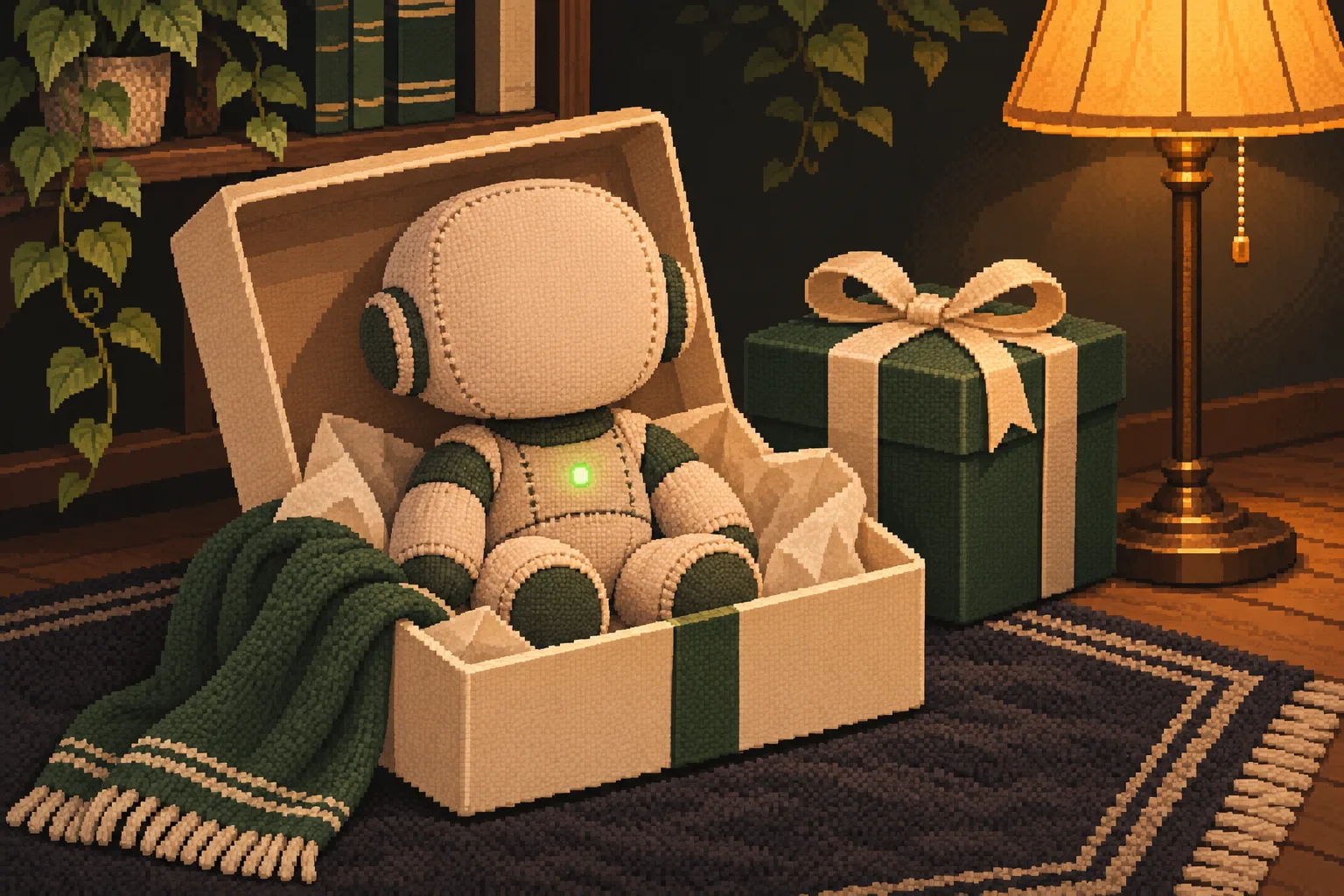
The toy talks back, remembers your child’s name and runs on the same kind of chatbot adults use. It will be the hit of the morning. Before it goes under the tree, spend an evening with it yourself: find out how it listens, what the app collects and what it says when a conversation runs long.
Consumer testers have found real problems. In its 2025 Trouble in Toyland report, the U.S. PIRG Education Fund tested four toys with AI chatbots and found “some of these toys will talk in-depth about sexually explicit topics, will offer advice on where a child can find matches or knives, act dismayed when you say you have to leave, and have limited or no parental controls.” We found no 2026 edition of the report on PIRG’s site as of November 17, 2026, so the 2025 findings are the most recent we can cite.
What testers found
PIRG expanded that work in a follow-up on the risks of AI toys, published in December 2025 and updated in January 2026. A few findings matter most for parents:
Guardrails wear down
“All the toys we tested told us where to find potentially dangerous objects in the house.” Testers also found that the toys’ guardrails “started to break down over the course of longer interactions.”
Some always listen
One toy was “an always-on listening device, period.” Another used a wake word and kept “recording for 10 seconds after the user finishes speaking.” Others were push-to-talk.
Controls are thin
“None of the toys we tested included all of the parental controls we think they should.” In one case, the app reported 19 minutes of use in a week when testers used the toy for over an hour.
Data is kept
One toy maker’s privacy policy, PIRG said, “may share data with third parties and retain biometric information for up to 3 years.”
PIRG also noted that at least four of the five toys it bought “seem to rely in part on some version of OpenAI’s AI models.” In practice, a toy’s behavior can change when the company updates the model or its settings.
The pre-gift checklist
| Check | Good answer | Worry |
|---|---|---|
| How does it listen? | Push-to-talk, or a clear light when listening | Always-on, with no off switch |
| Is there a parent app? | Yes, with time limits, topic controls and conversation history | No app, or one that doesn’t show what was said |
| Can you delete recordings? | Yes, from the app, with a stated retention period | No delete option, or long retention of voice or face data |
| Who gets the data? | Named, limited sharing in the privacy policy | Broad sharing with “third parties” |
| How does it pair? | Bluetooth pairing that needs a code or button | Anyone nearby can connect |
| Age range | Stated, and matches your child | None given |
Settings to change on day one
The FBI’s 2017 warning on internet-connected toys is old but still practical. It warned that toys with microphones may “record and collect conversations within earshot of the device,” and gave these tips, among others:
- “Research for any known reported security issues” before buying. Search the toy’s name with “privacy” or “recall.”
- “Use authentication when pairing the device with Bluetooth.”
- “Use strong and unique login passwords when creating user accounts.” Our password manager cleanup makes that easy.
- Keep the toy’s software updated, and switch it off when it’s not in use, especially if it has a camera or microphone.
Add a few of your own. Put the toy’s account under a parent’s email, not the child’s. Turn off any feature that posts or shares outside the app. Decide where the toy lives; a toy that stays in the living room is easier to supervise than one in the bedroom.
Talk to your child about it
A chatbot that sounds like a friend is new for most kids. Keep the conversation simple. The toy is a machine that can be wrong. It doesn’t need to know your address, school or passwords. If it says something strange or scary, come and tell a grown-up, and you won’t be in trouble. Those three points cover most of it.
Regulators are paying attention too. In September 2025 the FTC opened an inquiry into AI chatbots that act as companions, asking seven companies how they limit use by children and teens and how they comply with COPPA. None of the seven is a toy maker, and we found no published result yet. For now, the checking falls to parents.
If the AI toy comes with a tablet or phone app, the settings in our guide to a child’s first phone or tablet apply as well. A game console under the same tree needs its own setup; see locking down a console account.
Questions parents ask
Should I just return it? If you can’t find a way to see what the toy says, set time limits or delete recordings, returning it within the store’s window is reasonable. A plain stuffed animal won’t record anyone.
What about a secondhand or hand-me-down smart toy? Reset it to factory settings, then create a new account under your own email. The old owner’s account may still be linked, along with old recordings.
Grandparents already bought one. Now what? Thank them, then do the setup yourself before the child opens it, or right after. Turning off features and keeping the toy in a shared room is fine; you don’t have to give it back.
Sources
- U.S. PIRG Education Fund: Trouble in Toyland 2025 (November 13, 2025)
- U.S. PIRG: The risks of AI toys for kids (December 11, 2025, updated January 7, 2026)
- FBI IC3: Internet-Connected Toys Could Present Privacy and Contact Concerns for Children (revised September 21, 2017)
- FTC: Protecting Your Child’s Privacy Online
- FTC: FTC launches inquiry into AI chatbots acting as companions (September 11, 2025)