A Tractor on Sale, a Dealer on the Phone: How Fake Farm-Equipment Listings Steal Deposits
The FTC warns that scammers are impersonating real farm-equipment dealers and demanding deposits for machinery they do not have. Learn how to verify the seller, the equipment and the payment instructions before a high-value purchase.
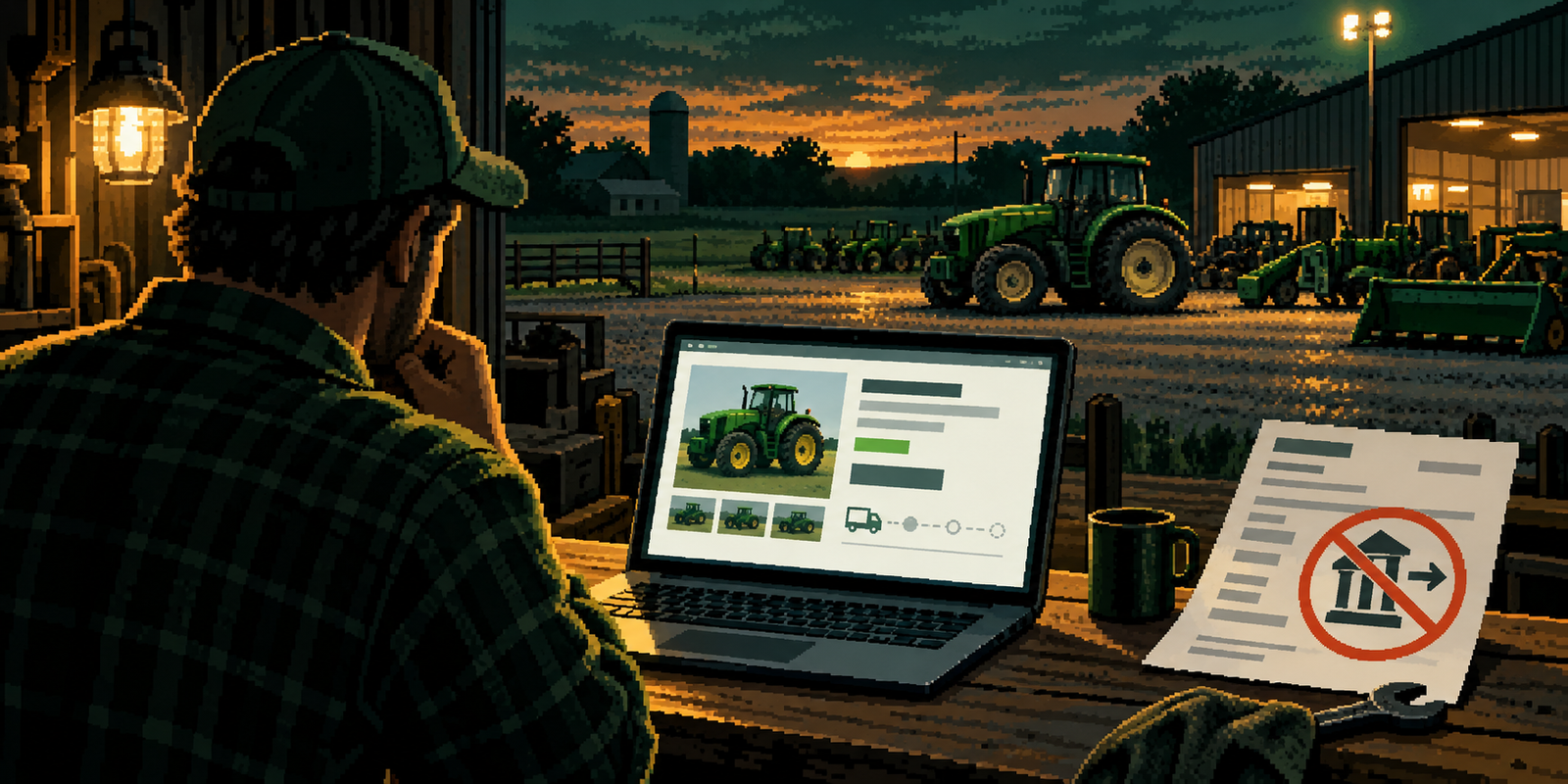
A low-price tractor listing can look like a rare chance to keep a farm moving. The danger is not only a fake website. In a September 2026 consumer alert, the Federal Trade Commission described scammers who impersonate real farm-equipment dealers, advertise machinery they do not have, and press buyers to send a large deposit—often by wire transfer—before the promised shipment never arrives.
- A real dealer’s name, address, photos, and invoice can be copied onto a fake listing.
- Find the dealer through the manufacturer’s official dealer locator or a known local source, then call a number you locate independently.
- Do not let a seller rush you into a wire, crypto, gift-card, or payment-app transfer to “hold” equipment you have not independently verified.
Why this is a high-impact impersonation scam
Farm machinery is expensive, specialized, and often needed on a schedule. A broken tractor or a short planting window can make a buyer feel that waiting means losing income. Scammers understand that pressure. They copy a legitimate business’s name and branding, lift images of equipment from another listing, and create a convincing page or social post. Some put ads in search results, where a buyer may assume a prominent placement means a business has been vetted.
The impersonated dealer may be a real company that has no connection to the listing. The fraudster can send a formal-looking quote, purchase agreement, serial number, delivery date, and even a scanned identity document. Those details are props until independently confirmed. A real company’s public reputation does not authenticate a phone number or payment instruction that arrived through a different channel.
The FTC’s alert describes a familiar sequence: a buyer sees equipment at an attractive price, contacts the apparent seller, receives an invoice or agreement, and is told to transfer thousands of dollars. Once payment clears, the supposed dealer delays shipment, invents a problem, asks for another fee, or disappears. The equipment was never available to that seller.
Verify the seller outside the listing
Start with the manufacturer’s own website. Use its official dealer locator to find the business, then call the phone number shown there—not a number in the ad, invoice, text, or “verification” email. Ask the dealership to confirm that it listed the exact equipment, identify its location, and explain how deposits are handled. If the seller claims to be a branch, ask the main office to confirm that branch and the person handling the transaction.
Search the business name with the city and state, but treat search results as a starting point rather than proof. Look for a consistent address, working main line, years of public activity, and independent mentions. A scammer can create a new website, buy an ad, or copy a business’s About page. Reverse-image search can sometimes show that equipment photos were taken from an older listing, but a clean result does not prove the photos are genuine.
Ask for details that a real seller can verify without turning the exchange into a document-collection exercise: the equipment’s physical location, make, model, year, hours, serial number, condition, and what is included. Request a live video walk-around that shows the machine and a paper with a one-time phrase you choose. This can reduce the chance of recycled photos, but it is not conclusive—a video can be staged, and an honest seller may be unable to arrange one immediately. Combine signals and independently confirm with the dealer.
Listing signals: useful clues, not a verdict
| Signal | Why to pause | Safer next step |
|---|---|---|
| Price far below comparable equipment | A bargain creates urgency and can make a buyer ignore normal checks. | Compare similar model, year, hours, and condition; ask the real dealer whether the offer exists. |
| Seller says it is a “warehouse,” auction, or remote lot | The story can explain why you cannot inspect the machine. | Independently locate the site and ask the named business to confirm it. |
| Pressure to wire a deposit today | Wire transfers can be difficult to reverse; urgency removes time for verification. | Pause. Discuss a documented payment method with the genuine dealer and your bank. |
| Seller sends a badge, registration, or dealer certificate | Documents and images can be copied or altered. | Verify the company and employee using contact details found separately. |
| Payment details change at the last minute | An account switch can indicate impersonation or a compromised conversation. | Stop and call the established main number to confirm the change verbally. |
Before money changes hands
Make a short transaction file. Save the original listing URL and screenshots, the seller’s email and phone number, each version of the quote, the equipment description, serial number, payment instructions, and promised delivery terms. Check that the legal name on the contract matches the entity you independently verified. If the seller says to pay a different company, individual, or “escrow” service, verify that arrangement through the dealer’s published number before proceeding.
For a large purchase, arrange an in-person inspection or hire an independent mechanic when feasible. Confirm the serial number on the machine and the paperwork. Ask who has title, whether there are liens, and what the agreed transport and insurance arrangements are. Those questions are ordinary due diligence, not an accusation. A legitimate seller should be able to explain the process, even if a particular question requires time to answer.
Do not use a payment method solely because a stranger says it is safer. Wire transfers, cryptocurrency, gift cards, and some instant payment services may provide limited recourse. A card, bank transfer, or escrow arrangement can also carry risks, fees, and terms; use the provider’s own guidance and do not assume that the word “escrow” protects you. Do not send your online-banking password, one-time code, or identity documents through an unsolicited link.
If the listing was fake or you already paid
Contact your bank or payment service immediately using its official app or number. Ask whether the transfer can be stopped, recalled, or investigated. Be direct that you may have sent money to an impersonator. If the payment is still pending, timing can matter. Do not pay a second “release,” “insurance,” or “refund” fee to anyone who contacts you after the loss; follow-up recovery offers are a separate common fraud pattern. Our recovery checklist can help organize the first steps.
Report the fake listing to the platform where it appeared and to the genuine business whose identity was copied. The FTC collects reports at ReportFraud.gov; the FBI Internet Crime Complaint Center accepts reports about internet-enabled crime. Keep the report number and share it with the bank, insurer, or law enforcement agency handling the case. A report does not guarantee recovery, but it may help connect related complaints and preserve a record.
A practical rule for busy buyers
With equipment purchases, the strongest safety check is not a polished invoice or a persuasive phone call. It is independent confirmation from the real business, using a contact route you found yourself, before money moves. If a seller makes a discount conditional on skipping inspection, switching channels, or wiring immediately, treat the deadline as a reason to pause—not a reason to hurry.
For more ways to check an urgent request before acting, browse our field guides. The same basic habit—verify the person and the payment instruction through a separate, trusted channel—works whether the target is farm equipment, an invoice, or a familiar account.